Urban mining made simple

aurum.bio develops modular technology to recover gold, copper, and other valuable metals from electronic waste. We are making regional urban mining cleaner, simpler, and more accessible.

Challenge 

Electronic waste is one of the world's fastest-growing waste streams, containing valuable critical raw materials that are increasingly important for modern technologies and the clean energy transition.

Only around 22.3%¹ of global electronic waste is collected and recycled, while recovery of valuable materials still largely depends on energy-intensive processes, hazardous chemicals, and centralized smelting infrastructure.

This challenge is particularly significant for regional markets, where access to electronic waste processing infrastructure remains limited. As a result, valuable resources travel further, increasing costs, emissions, and supply chain complexity.

We are enabling a new model of decentralized, efficient urban mining for regional markets.

1 Global E-waste Monitor 2024, UNITAR & ITU

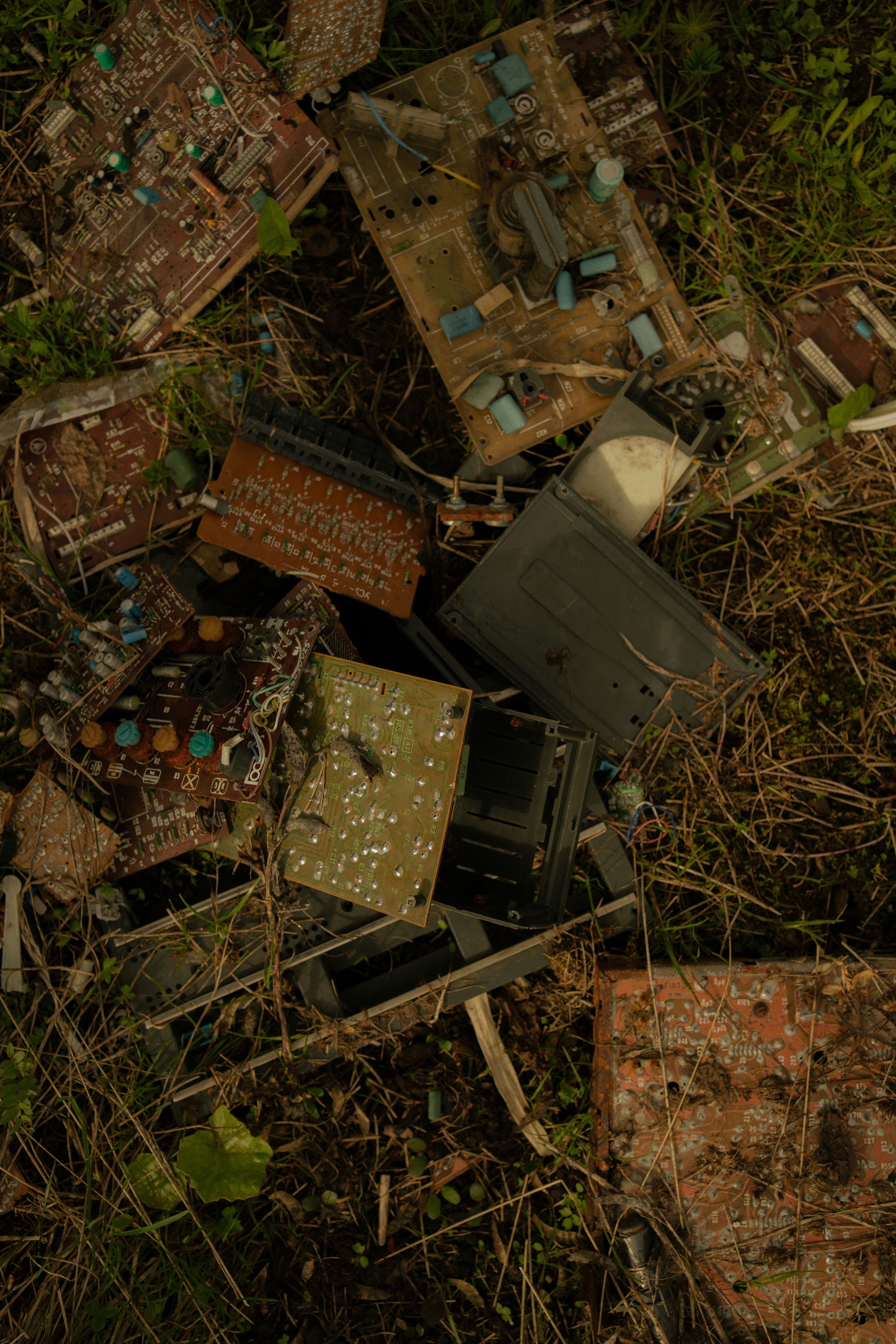
Discarded electronic waste in the environment

Solution

Our modular technology is designed for regional electronic waste streams, maximizing resource recovery while reducing environmental impact.

01

Base metal extraction 

Copper and other base metals are selectively dissolved and removed, concentrating the gold and other precious metals in the remaining solid fraction. 

/ Copper is classified as critical & strategic raw material in the EU's CRM Act

02

Precious metal extraction

Gold and other precious metals are transferred into solution using cyanide-free chemistry that runs at ambient temperature. No aqua regia, no high-temperature smelting. 

/ E-waste PCBs can contain up to 800× higher gold concentrations than natural ores

03

Precious metal recovery

Gold is recovered out of the leachate: two independent routes are under evaluation - chemical reduction using low-impact reagents, and bio-based selective capture.

/ Our target: high-purity gold recovery without energy-intensive smelting or hazardous chemicals

Benefits

By recovering valuable metals from electronic waste, we help reduce reliance on energy-intensive smelting and primary mining while enabling a more circular resource supply.

Energy demand ~80% lower
CO₂ emissions ~70% lower
Hazardous air emissions ~90% lower

Indicative estimates, based on published life-cycle assessments comparing hydro- and pyro-metallurgical recovery of metals from waste circuit boards, and metal recycling versus primary (virgin) production. Source: “Comparative life cycle assessment of copper and gold recovery from waste printed circuit boards,” Journal of Hazardous Materials, 2024.

Roadmap

2024Done

Market Validation

  • Market study and opportunity assessment
  • Identification of industrial applications
  • Business model development
2025Done

1st Proof of Concept

Water Research and Environmental Biotechnology Laboratory at RTU

  • Bioleaching feasibility study for precious metal recovery
  • Evaluation of biological recovery approaches
  • Insights shaping the next technology generation
2026 H1Done

2nd Proof of Concept

Department of Chemistry at LU

  • Validation of a green chemistry-based gold recovery
  • Cyanide-free alternative extraction pathway
  • Toward a sustainable precious-metal recovery process
2026 H2In progress

3rd Proof of Concept

  • Higher selectivity and efficiency
  • Sustainable gold recovery & separation methods
  • Key components for a lab-scale solution

Get in touch

Whether you are an investor, industrial partner, or research organisation, we'd love to explore how we can accelerate sustainable resource recovery together.

Contact us.